The Complete Guide to Pet Therapy Benefits
November 18, 2026 · By Mill View Memory Care Team
Pet Therapy Benefits for People Living With Dementia
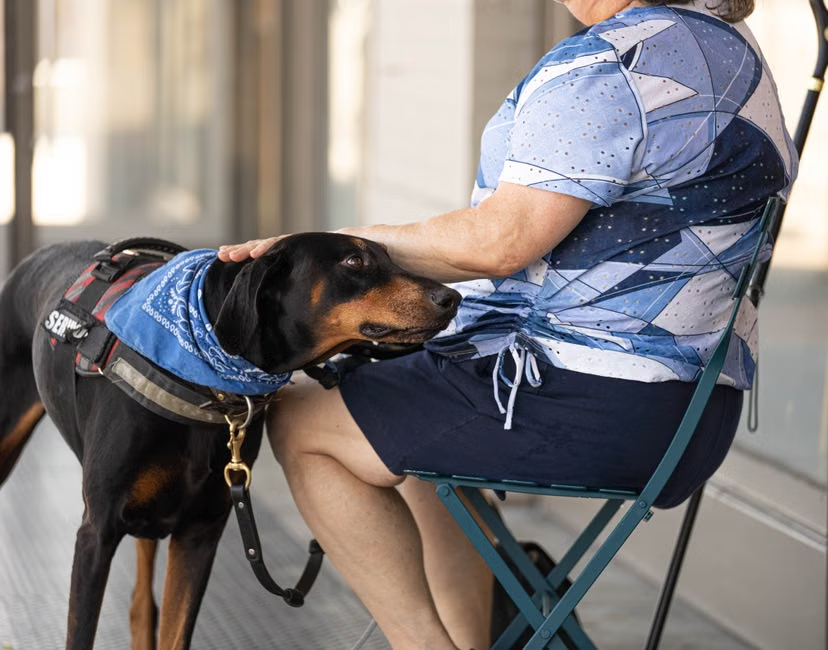
Pet therapy uses supervised time with a trained animal to support health and well-being. For someone living with dementia, a visit may ease stress, lift their mood, and encourage meaningful conversation. Animals possess an instinctive capacity to offer unconditional affection without demanding complex verbal responses, which creates a safe and reassuring atmosphere for older adults experiencing cognitive changes. Formal animal-assisted therapy goes a step further: a healthcare or care professional sets an individualized goal and actively tracks progress across multiple visits. A friendly animal visit can be valuable, too, providing comfort and spontaneous joy, but it is not the same as structured treatment.
The best visit starts with the person, not the animal. Staff members should always evaluate individual comfort levels with pets, past personal histories, specific allergies, and distinct safety needs. At Mill View Memory Care, pet therapy is one of the meaningful activities available to residents as part of comprehensive, person-centered care designed to nurture emotional well-being.
What Is Pet Therapy? Definitions, Models, and Key Distinctions
The human-animal bond has offered profound physical and emotional comfort for centuries. Historical records show therapeutic animal interactions dating back to the late 18th century at the York Retreat in England, where domestic animals roamed hospital grounds to encourage social engagement and self-regulation among patients. In modern clinical environments, animal-assisted interventions serve as structured modalities that deliberately integrate trained animals into healthcare treatment plans.
According to patient education on animal-assisted interventions, pet therapy functions under the direct guidance of licensed clinicians—such as physicians, physical therapists, occupational therapists, and recreational therapists—to meet targeted physical, cognitive, and social milestones. In the broader healthcare landscape, recreational therapists, who often lead these clinical sessions, earned a median wage of $60,280 as of 2024. Within holistic residential settings, these focused sessions complement comprehensive senior care services to support total body and cognitive health across aging populations.
Animal-Assisted Therapy vs. Animal-Assisted Activities
Understanding animal interventions requires clearly distinguishing between Animal-Assisted Therapy (AAT) and Animal-Assisted Activities (AAA):
- Animal-Assisted Therapy (AAT): A structured, goal-directed clinical intervention directed and delivered by a specialized healthcare professional. AAT requires formal treatment plans, documentation of measurable clinical progress, diagnostic baseline assessments, and set session goals (such as regaining fine motor skills, improving mobility, or lowering resting heart rate).
- Animal-Assisted Activities (AAA): Casual, spontaneous visitation programs that offer motivational, educational, or recreational opportunities across care settings. While therapeutic and emotionally enriching, AAA does not require individualized medical objectives or formal clinical charting.
Therapy Animals vs. Service Animals vs. Emotional Support Animals
Animals support human health in distinct legal and functional categories. The Americans with Disabilities Act (ADA) defines strict legal boundaries between these respective roles:
Category Primary Function Legal Access Rights (ADA) Training Requirements
Service Animals Individually trained to perform specific tasks directly related to an individual's disability (e.g., guide dogs, seizure alert, mobility assistance). Full public access rights to all public facilities, commercial businesses, and transit. Rigorous, specialized task-specific training and public access readiness.
Emotional Support Animals (ESAs) Provide therapeutic emotional companionship to relieve distress or anxiety; not task-trained. Housing protections under the Fair Housing Act; no general public access rights. Basic domestic obedience; no specialized disability task training mandated.
Therapy Animals Provide clinical comfort and interaction to multiple individuals across healthcare, school, and elder-care settings. No public access rights; permitted only in facilities with official permission or invitations. Temperament tested, obedience certified, and cleared by thorough veterinary screening.
Documented Physical and Psychological Health Benefits
Animal interaction produces quantifiable physiological shifts within the human nervous system. Regular, calm contact with a gentle animal prompts a measurable decline in stress-related hormones like cortisol and adrenaline, alongside a corresponding increase in beneficial neurochemicals such as oxytocin, dopamine, and endorphins.
Physiological Impacts on Pain and Vital Signs
Interacting with therapy animals creates distinct cardiovascular benefits, including noticeable reductions in resting blood pressure, calmer respiration patterns, and stabilized pulse rates. In oncology settings, animal interventions conducted during chemotherapy infusions have been shown to temporarily reduce depressive symptoms and elevate arterial oxygen saturation levels.
Furthermore, a non-randomized pilot study in a specialized cancer pain clinic demonstrated that animal interactions significantly reduced self-reported pain, emotional distress, and depressive states compared to typical waiting room stays. For physical rehabilitation, structured animal handling encourages fine motor coordination, joint flexion, bilateral coordination, and balance recovery during supervised exercises.
Psychological and Cognitive Benefits of Pet Therapy
The psychological benefits of animal interaction are exceptionally broad. According to Humane Society research on animal-assisted therapy benefits, 92.5% of surveyed participants agreed that interacting with companion animals noticeably lifted mood and reduced feelings of anxiety. Animal-assisted experiences diminish social isolation, spark natural conversation, boost self-esteem, improve emotional regulation, and provide genuine comfort for individuals navigating grief, generalized anxiety, or post-traumatic stress disorder.
Clinical Applications Across Healthcare and Senior Care Settings
Therapy animal programs operate in intensive care units, psychiatric facilities, educational institutions, trauma recovery centers, and crisis support environments nationwide.
Pet Therapy in Palliative and Pediatric Care
In pediatric medicine, animal programs transform the hospital experience into a less intimidating environment. Programs like Shriners Children's pet therapy clinical programs incorporate animals into wrap-around care for children recovering from acute burns, spinal cord injuries, and complex orthopedic surgeries. In a nonblinded randomized controlled trial of children with advanced malignancies, animal interventions lowered caregiver anxiety for up to 12 weeks following scheduled visits.
In end-of-life care, evidence-based AAT in palliative medicine emphasizes compassionate distraction, non-verbal comfort, pain reduction, and shared moments of peace for patients and families facing serious terminal illness.
Dementia Support and Specialized Memory Care
For individuals living with progressive memory loss, non-pharmacological interventions provide soothing comfort and sensory stimulation. A comprehensive review of five randomized controlled trials and five non-randomized controlled trials involving 413 participants revealed that animal-assisted therapy led to fewer behavioral and psychological manifestations of depression and agitation among patients with dementia.
At Mill View Memory Care, our dedicated team provides 24/7, person-centered support in Bend, Oregon. As a boutique, family-owned community, we incorporate gentle animal visits alongside private and shared apartments, restaurant-style dining, and advanced security protocols. Exploring our specialized memory care offerings shows how familiar daily routines reduce stress and confusion.
Families can review how residential memory care maintains resident safety alongside our detailed guide understanding what modern memory care services provide to see how structured engagement supports long-term dignity and personal fulfillment.
Program Requirements, Animal Selection, and Safety Protocols
Implementing animal programs requires strict, standardized protocols to protect human safety and safeguard animal welfare across all participating clinical environments.
Animal Selection, Species Diversity, and Certification Standards
While canines and equines remain the most recognized therapy species, domesticated cats, rabbits, guinea pigs, miniature horses, alpacas, and select farm animals also serve in structured therapeutic environments. Volunteer models, such as the Penn Medicine pet therapy volunteer model, rely on rigorous partner organizations. National registries like the Alliance of Therapy Dogs—which distributes $20,000 in annual scholarships from donations—and Pet Partners screen handlers and animals thoroughly before granting formal credentials.
Key certification requirements include:
- Dogs must successfully pass the AKC Canine Good Citizen (CGC) evaluation or an equivalent national temperament assessment.
- Animals must be at least 6 months to 1 year of age (depending on species guidelines) and fully house-trained.
- Handlers must complete comprehensive background checks, observational mentoring, facility orientation, and personal health assessments.
Managing Health Risks, Sanitation, and Animal Welfare
Healthcare facilities adhere to strict clinical safety measures:
- Zoonotic Infection Control: Animals must be fully vaccinated, bathed within 24 hours of scheduled visits, screened regularly for internal and external parasites, and completely clear of open skin lesions or shedding illnesses.
- Patient Screening: Contraindications include severe animal dander allergies, unhealed open wounds, unshielded medical lines, and severe immunosuppression.
- Animal Welfare: Handlers actively monitor for subtle signs of animal stress, displacement yawning, panting, or physical fatigue, limiting clinical sessions to 15 to 45 minutes to prevent overwork.
Frequently Asked Questions About Pet Therapy
Does health insurance cover animal-assisted therapy sessions?
Standard private medical insurance plans and Medicare generally do not cover out-of-pocket costs for standalone AAT, which typically range from $100 to $300 or more per clinical session. However, when animal interventions are formally integrated into physical, occupational, or recreational therapy billing codes with prior physician authorization, portions of the clinical treatment time may qualify for partial insurance reimbursement.
What qualifications must a pet meet to become a certified therapy animal?
A pet must demonstrate calm obedience, reliable responsiveness on leash, lack of food guarding or reactive barking, and complete comfort around unfamiliar medical equipment like wheelchairs, walkers, and IV poles. The animal must also have up-to-date vaccinations and pass both general and species-specific temperament evaluations.
How do healthcare facilities and families request pet therapy visits?
Most healthcare programs coordinate visits through their volunteer services department or integrative care teams. For instance, hospital integrative health and therapy animal access teams work directly with bedside nursing staff to assess patient interest, review clinical safety charts, and arrange private bedside or group common-room visits.
Conclusion
Pet therapy serves as a valuable non-pharmacological practice that nurtures emotional connection, cognitive stimulation, and physical ease. Whether lowering anxiety during chemotherapy infusions, encouraging mobility during physical rehabilitation, or easing agitation in memory care, the human-animal bond provides meaningful comfort across every stage of healing and aging.
Discover how Mill View Memory Care provides personalized, compassionate support in Bend, Oregon, and browse our senior health and caregiving blog for additional resources on dementia support, therapeutic enrichment, and elder care.
Ready to speak with someone?
Our team will be happy to help you explore whether Mill View is the right fit for your family.