A Comprehensive Guide to Comparing Car Safety Features
November 11, 2026 · By Mill View Memory Care
Which Safety Features Matter Most in Memory Care?
Dementia can affect judgment and a person's sense of place, so a safe setting needs more than locked doors. For families, the goal is to find care that protects a parent without taking away movement, comfort, and meaningful daily activities.
Essential Physical and Environmental Safety Features in Dementia Care
When designing an environment for someone living with cognitive decline, the building itself acts as a protective layer. As Alzheimer's disease and other forms of dementia progress, they alter sensory perception, depth awareness, and spatial orientation. Thoughtful architectural design can mitigate confusion, frustration, and physical accidents.
One cornerstone of purpose-built design is the continuous circular walking path. In traditional floor plans, dead-end hallways often cause agitation or sudden distress when a resident reaches a locked door or wall. Continuous looping corridors encourage safe pacing and gentle mobility, guiding residents naturally back toward central common areas and living rooms.
Wayfinding cues are equally essential. High-contrast colors on bathroom doorways, memory boxes containing familiar personal photos outside private suites, and clear pictorial signage help residents navigate independently. Outdoor access is another area where design impacts wellbeing. Enclosed sensory courtyards allow residents to enjoy fresh air, sunshine, and gardening without the risk of wandering into unsafe streets or parking areas. To discover more about environmental protection, read our overview on how memory care communities keep seniors safe.
Flooring choices directly influence fall risks. Communities must utilize commercial-grade, non-slip flooring that avoids high-gloss waxes or stark, high-contrast geometric patterns. To a person with altered depth perception, a dark patch on a floor can look like a deep hole, causing them to freeze or take dangerous, uneven steps. Balanced, high-lumen, anti-glare lighting combined with automatic nightlights ensures hallways and bedrooms remain clearly visible at all hours, significantly reducing shadow-induced disorientation.
Preventing Hazardous Wandering and Elopement Risks
Wandering is a natural expression of dementia, driven by boredom, curiosity, physical discomfort, or the search for a familiar person or place. Over 30% of nursing facility residents and up to 70% of community-dwelling older adults with dementia wander at some point. However, when wandering turns into an elopement—an unsupervised departure from a secure environment—the stakes escalate dramatically.
Statistics show a 25% fatality rate if a missing person with dementia is not located within the first 24 hours of an elopement. That risk rises to 40% after 72 hours, and 54% if missing for 96 hours or longer. Furthermore, elopement accounts for the highest average total paid indemnity among nursing home claims, averaging $325,561.
Communities utilize proactive management strategies, such as those outlined in the Hazardous Wandering and Elopement Toolkit, to balance security with freedom:
- Exit Disguises: Camouflaging exit doors with calming murals (such as a bookshelf or outdoor landscape) or positioning mirrors near doorways can divert attention and reduce exit-seeking urges.
- Delayed-Egress Doors: These emergency doors sound an audible alert and hold for 15 to 30 seconds when pressed, giving staff ample time to gently intercept and redirect a resident.
- Structured Assessments: Conducting risk evaluations upon admission, within 72 hours, quarterly, and following any significant change in health helps identify chronic wanderers early. Notably, 45% of elopement incidents occur within the first 48 hours of admission.
- Immediate Response Protocols: If a resident is unaccounted for, staff execute an immediate, coordinated search starting from hazardous areas (mechanical rooms, stairwells, and perimeter boundaries) while notifying local emergency services.
Modern Technology and Smart Safety Features for Fall and Wander Management
Technology serves as a powerful support system for caregiving teams. Modern safety ecosystems incorporate several unobtrusive monitoring tools:
- RFID Sensors and Wearable Trackers: Discrete pendants, bracelets, or clothing tags communicate with door management hardware to automatically lock specific perimeter doors when a wander-prone resident approaches.
- Boundary Lasers and Motion Sensors: Placed near bedsides or thresholds, these sensors alert caregivers the moment a high-fall-risk resident stands up at night, allowing staff to offer immediate walking assistance.
- Silent Environmental Alerts: Unlike blaring alarms that can induce panic or trigger catastrophic reactions, silent paging systems send notifications directly to staff handheld devices.
While valuable, technology has clear limitations. Sensors can experience signal drops, batteries deplete, and improper calibration can cause "alert fatigue" among staff. Electronic aids must always complement—never replace—hands-on, compassionate human observation.
Evaluating Staffing Standards, Training, and Emergency Preparedness
A facility may boast state-of-the-art architecture, but true safety relies on the people delivering care. Evaluating a memory care community requires taking a close look at staffing ratios, dementia-specific credentials, and crisis protocols.
Higher staff-to-resident ratios are necessary in memory care compared to standard assisted living settings. Dementia care demands hands-on assistance with dressing, eating, hydration, hygiene, and continuous emotional validation. During your evaluation, ask for the exact ratio on each shift—including overnights and weekends, when behavioral changes or sleep disturbances are frequent.
Ongoing dementia education is critical. Certified caregivers understand how to identify unmet physical needs—like localized pain, urinary tract infections, hunger, or fatigue—before these issues escalate into severe agitation or distress. Training programs, such as those highlighted in the Memory Care: Safeguarding a New Model of Senior Living advisory, emphasize verbal de-escalation, gentle redirection, and non-pharmacological interventions over sedating medications.
Emergency preparedness must also be tailored to cognitive impairment. Facilities must run regular drills covering fire, severe weather, and power outages. Evacuating residents with dementia requires clear staff assignments, familiar transitional objects to keep individuals calm, and dedicated family communication procedures.
Balancing Resident Independence With Everyday Safety Protocols
An overly restrictive environment can harm emotional wellness, causing rapid physical and cognitive decline. True quality of care lies in creating a secure perimeter that permits unrestricted, autonomous movement within.
By practicing person-centered care, we honor each individual's background, daily routines, and remaining capabilities. If an individual enjoys folding towels, sorting hardware, or sweeping, incorporating these safe, purposeful activities fulfills emotional needs while keeping them engaged. To see how these principles are integrated into daily life, explore our available living options.
Transparent Family Communication and Condition Monitoring
Safety requires active, ongoing collaboration between families and care teams. When cognitive abilities change, care strategies must adapt promptly.
Structured care conferences should take place quarterly, as well as immediately following any sudden behavioral change, fall, or medication adjustment. Communities should assign a primary contact person for each family, outline clear response times, and establish transparent notification thresholds for minor bumps, scrapes, or physician visits. Understanding what services memory care provides helps families stay engaged and informed throughout every stage of care.
Comparing Safety Protocols: Memory Care Facilities vs. Home Environments
Caring for someone with dementia at home is deeply loving, but as the condition progresses, managing complex medical and behavioral needs can overwhelm even the most dedicated family caregivers.
Safety Category Specialized Memory Care Facility Typical Home Environment
Physical Layout Circular paths, anti-glare non-slip floors, zero threshold steps Hallways with sharp turns, throw rugs, multi-level stairs
Wandering Protection Monitored delayed-egress doors, discrete wearables, enclosed courtyards Deadbolts, DIY door chimes, unmonitored outdoor exits
Medication Safety Licensed nurse oversight, electronic records, automated dispensing Manual pillboxes, risk of forgotten or double doses
Staffing & Monitoring 24/7 trained caregivers awake on site, immediate call response Exhausted family caregivers, unmonitored overnight hours
Kitchen & Fire Safety Commercial kitchens off-limits to unsupervised entry, auto shut-offs Accessible gas/electric ranges, sharp knives, cleaning chemicals
Nutrition & Hydration Structured dining, texture-modified meals, weight tracking Irregular meal preparation, choking and dehydration risks
In professional settings, medication management is tightly regulated. Licensed staff administer prescriptions, cross-check electronic records for adverse interactions, and log vitals before giving blood pressure or cardiac medications. Our comprehensive care services ensure that health oversight remains seamless and proactive around the clock.
Room-by-Room Home Safety Features and Household Modifications
For families currently supporting a loved one with Alzheimer's or dementia at home, performing a comprehensive room-by-room safety audit is critical to preventing accidents:
- Kitchen: Install stove knob covers or an automatic stove shut-off device. Place sharp cutlery, peelers, small appliances, and toxic cleaning supplies in locked cabinets. (And no, a stove knob cover isn't a kitchen fashion statement—it is a vital safety tool!)
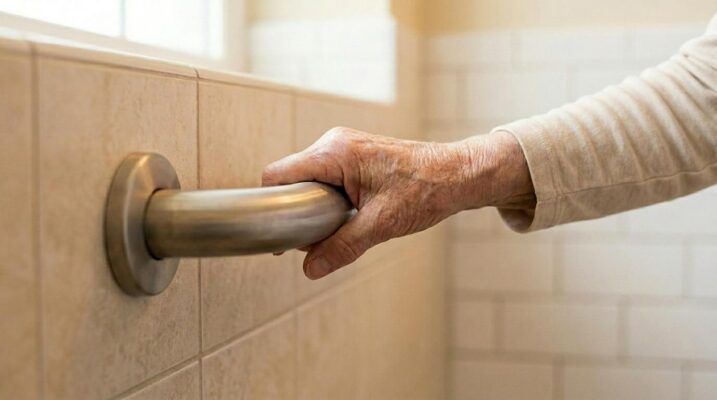
- Bathrooms: Mount heavy-duty grab bars securely into wall studs beside toilets and inside walk-in showers. Remove all threshold lips, lay textured non-slip mats, and set water heaters to 120°F (48.8°C) or lower to prevent scalding.
- Living Areas & Hallways: Remove all throw rugs, tuck electrical cords behind baseboards, and ensure heavy furniture (bookcases, dressers, televisions) is anchored firmly to wall studs.
- Bedrooms: Install soft, sensor-activated nightlights along baseboards between the bed and the bathroom. Keep the path clear of clutter and ensure clothing is stored at reachable heights.
- Entryways & Storage: Secure all firearms, power tools, hunting gear, lawn chemicals, and alcohol behind locked doors. Install simple door chimes or motion sensors above exterior exits to alert you if an exit is opened at night.
Recognizing Safety Red Flags and Warning Signs in Senior Communities
When touring or monitoring a memory care setting, families must remain observant. Certain indicators suggest that a community may not be upholding necessary standards:
- Unexplained Bruising or Frequent Falls: A pattern of physical marks without documented incident reports or clear caregiver explanations.
- Heavy Chemical Odors: Strong perfumes or industrial cleaning scents used to mask chronic incontinence or hygiene issues.
- High Caregiver Turnover: Unfamiliar faces on every visit, hurried staff, or caregivers who seem unaware of your loved one's specific care plan.
- Vague Staffing Answers: Management evading direct questions about exact staff-to-resident numbers on night and weekend shifts.
- Over-Reliance on Sedatives: Sudden, drastic declines in alertness or mobility that may point to inappropriate chemical restraints.
If you suspect safety violations, document dates, times, and specific observations. Escalate concerns to the Director of Nursing or Executive Director. If issues remain unresolved, consult the local Long-Term Care Ombudsman or file a report with your state licensing agency, as recommended in Care.com's memory care safety standards guide.
Verifying Licensing, Accreditation, and Regulatory Compliance
Before selecting a community, verify that its state license is current and in good standing for specialized memory care. State health and human services departments publish public survey histories, detailing past citations, substantiated complaints, and corrective action plans.
External accreditation provides another layer of accountability. Programs evaluated by organizations like The Joint Commission or guided by credentialing bodies like the National Council of Certified Dementia Practitioners adhere to rigorous standards for staff education, life safety codes, and clinical coordination.
Facilities must also run comprehensive criminal background checks and drug screenings on all employees. Families seeking short-term stays or temporary caregiver relief can utilize respite care programs to experience a community's safety measures, environment, and staff before making a permanent transition.
Frequently Asked Questions About Memory Care Safety
What is the difference between standard assisted living and memory care safety?
Memory care communities feature secure, monitored perimeters, delayed-egress doors, and wandering management systems that standard assisted living environments lack. Additionally, memory care units maintain higher staff-to-resident ratios, continuous 24-hour awake staffing, and specialized dementia communication training designed to de-escalate behavioral distress.
How do memory care communities respond if a resident goes missing?
Communities initiate an immediate, all-hands search protocol. Staff systematically sweep common spaces, private rooms, utility closets, mechanical rooms, and outdoor courtyards. If the resident is not located within minutes, the community initiates a facility lockdown, dispatches local law enforcement, and notifies designated family contacts.
What questions should families ask about safety during a community tour?
Families should ask:
- What is your exact staff-to-resident ratio during the day, evening, and overnight shifts?
- What specific certifications and dementia-related training hours do your caregivers complete?
- How do you manage fall prevention, and what is your protocol following an unwitnessed fall?
- How often do you run emergency evacuation and missing-resident drills?
- May I see a copy of your most recent state inspection report and corrective action plan?
Conclusion
A robust safety strategy for memory care unites physical architecture, modern technology, and compassionate, highly trained caregivers. Protecting someone with Alzheimer's or dementia does not mean locking them away from the world; it means providing an enriching, secure environment where they can move freely, connect with others, and live with dignity.
At Mill View Memory Care, our boutique, family-owned community in Bend, Oregon, provides 24/7, person-centered support in an intimate, secure setting. From beautiful private apartments and secure sensory courtyards to chef-prepared dining and pet therapy, we ensure your loved one receives the highest level of care. Contact us today to tour our personalized memory care community and discover how we deliver safety, comfort, and peace of mind.
Ready to speak with someone?
Our team will be happy to help you explore whether Mill View is the right fit for your family.